
Best Portable Power Stations: Your 2025 Buying Guide
By Michael McCloud | Updated September 2025
From sudden power outages to weekend adventures off the grid, portable power stations are fast becoming essential. Imagine keeping your fridge running during a blackout or charging your camera while camping—in both cases, you’ll be glad you planned ahead. Let’s walk through everything you need to make a smart choice for your portable power needs.
Why Portable Power Stations Are Trending (and Growing Fast)
First, the big picture: the global portable power station market hit about $603 million in 2024, and analysts expect it to rise to over $1 billion by 2032—with a compound annual growth rate between 7.5% and 17%, depending on the source Fortune Business Insights+1. In the U.S. alone, the market looks set to nearly double from $294 million in 2025 to $505 million by 2032 Fortune Business Insights.
Why the surge? A few clear reasons:
- More frequent outages from aging grids and extreme weather
- Rise in outdoor activities—RVs, camping, adventure work
- Growing demand for cleaner energy alternatives over noisy, fuel-burning generators
Bottom line: these battery-powered units aren’t just “nice to have.” They’re quickly becoming must-have gear for modern life.
What Is a Portable Power Station—and Why Choose One?
Think of a portable power station as a modern, cleaner version of a generator. It’s a rechargeable battery pack fitted with AC outlets, USB ports, and sometimes DC connectors. You recharge it via wall power, car port, or solar panels—then deploy it wherever you need clean power on the go.
Common scenarios include:
- Camping in remote locations
- Power backup for CPAP machines or routers during blackouts
- Fieldwork requiring laptop charging
- Emergency home backup for lights, phones, or small appliances
Unlike gas generators, these stations are silent, fume-free, and often safe indoors. Plus, they offer expandable options—your setup can grow as your needs change.
What Specs Matter When Buying a Station?
Understanding features helps you match the right model to your needs. Here’s what to check:
Battery Capacity (Wh)
This tells you how much energy the unit stores. For example, a 1,000 Wh station can deliver 1,000 watts for one hour—or 100 watts for ten hours.
Output Power (Watts)
This describes how much load the unit can handle at once. Most laptops and small appliances run under 500 W, but air conditioners need much more.
Port Options
Look for AC outlets, USB-A, USB-C, and car ports. Think about what you’ll plug in but also don’t overbuy ports you won’t use.
Recharge Methods
- Wall (fastest)
- Car (slower)
- Solar (ideal for off-grid)
Some brands double input for faster solar recharge under right conditions.
Weight & Carrying
Smaller units (under 10 lbs) work for day-use and camping. Larger home units (over 60 lbs) still offer handles or wheels, but plan where they go.
Battery Technology & Lifespan
- LiFePO4: Safer, longer lifespan—3,000–4,000 charge cycles
- Li-ion: Common but degrades sooner
Build & Extras
Look for display panels, app control, UPS switch-over, and durable construction. These are small touches that matter when you really need them.
Real Use Cases: Match Size to Need
Here’s a guideline to pair capacity with usage:
| Scenario | Recommended Size (Wh) |
|---|---|
| Camping / Phone charging | 200–500 Wh |
| Home Essentials (lights, router, fridge) | 1,000–2,000 Wh |
| RV & Mobile Work | 500–1,500 Wh |
| Extended Emergencies | 2,000+ Wh or expandable units |
Best Portable Power Stations of 2025
Below are top-rated models suited for different users—with real specs to guide your pick:
1. Jackery Portable Power Station Explorer 300 – Best Overall
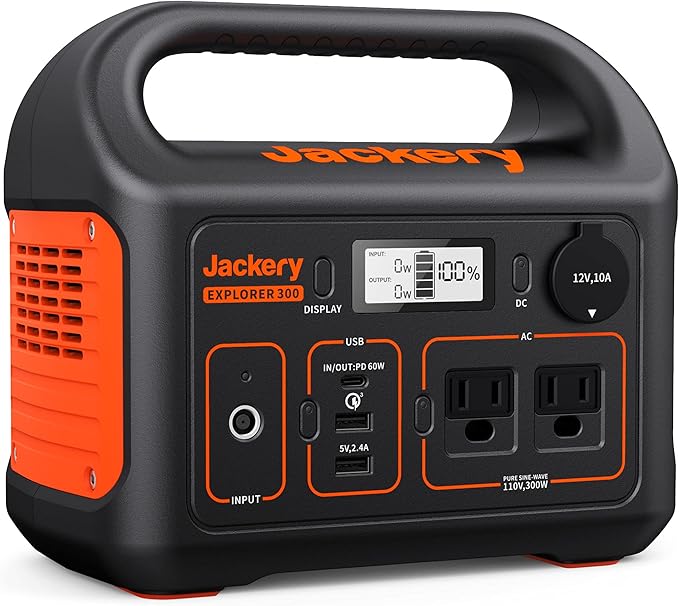
- Output: 300 watts
- Weight: 7.1 lbs
- Highlights: PD USB-C In/Out. portable power station in your backpack. No fumes. No noise. no maintenance
🔗 View on Amazon →
2. EcoFlow Delta 3 Plus – Top Tier Performance
Featured by TechRadar as “best overall,” offering 1,024 Wh and 2,400 W output with 10 ms UPS switch-over TechRadar
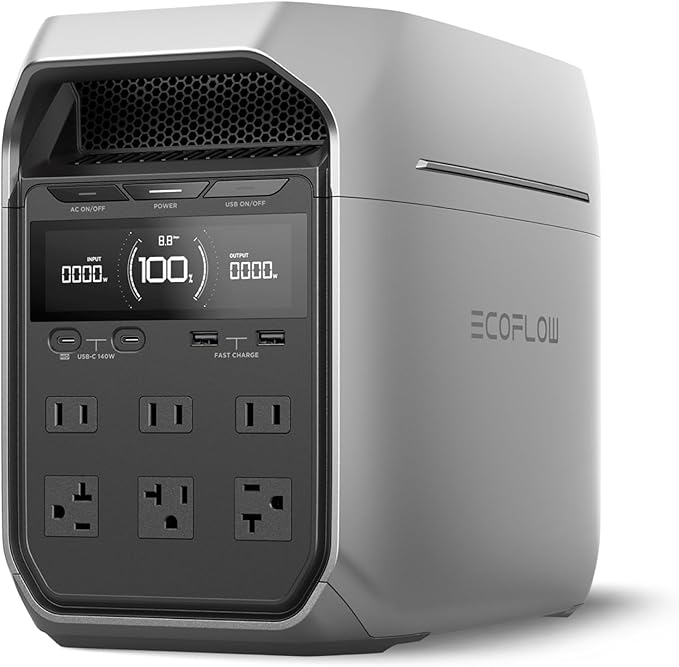
- Output: 1024 watts
- Weight: 27 lbs.
- Highlights: AC Charging Cable, Car Charging Cable, DC5521 to DC5525 Cable, EcoFlow DELTA 3 Plus Power Station, Manuals
🔗 View on Amazon →
Anker 521 PowerHouse – Best Compact
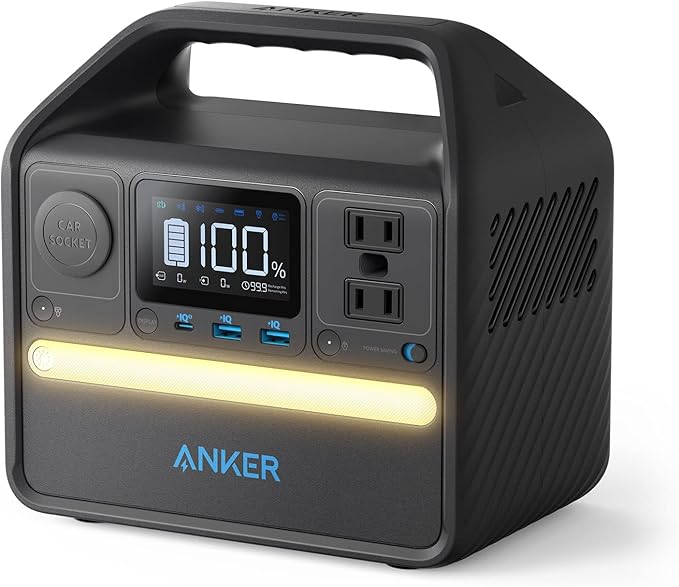
- Output: 300 watts
- Weight: 8.2 lbs.
- Highlights: DC adapter, car charging cable, welcome guide, our worry-free 5-year warranty, and friendly customer service.
🔗 View on Amazon →
Bluetti AC200PL – Best Solar-Ready
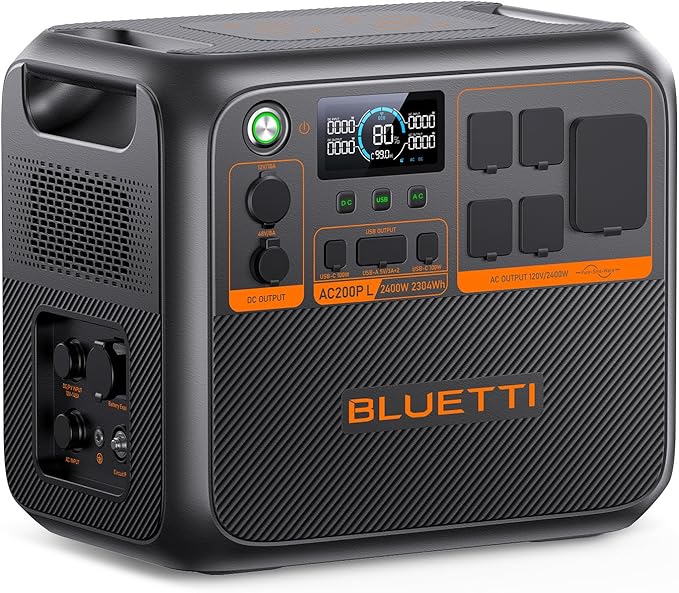
- Output: 2400
- Weight: 72 lbs..
- Highlights: AC charging cable, solar/car charging cable, XT90-aviation cable, user manual.
🔗 View on Amazon →
Anker Solix F3800 – Best for RV & Heavy Use
Massive 3,840 Wh, 6,000 W output; can expand to 26.9 kWh and includes UPS outputs and solar integration. Directly Power Your RV: Just plug Anker SOLIX F3800 into your RV’s power inlet via the NEMA 14-50 or L14-30 ports. Popular RV models are compatible, and you can power all appliances at once.
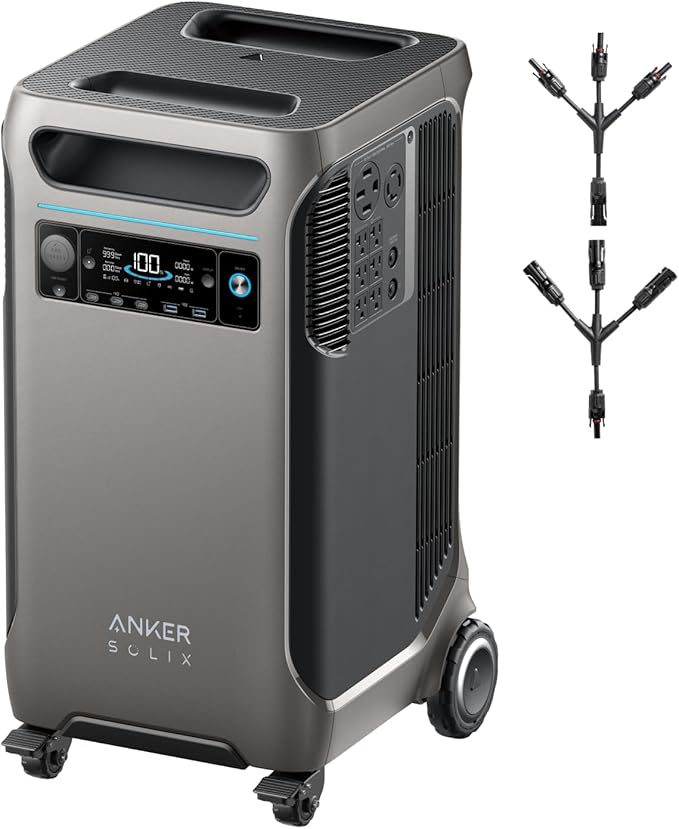
- Output: 6000
- Weight: 132.28 lbs..
- Highlights: AC Charging Cable,Solar to XT60 Charging Cable,MC4 Solar Charging Connector,User Manual
🔗 View on Amazon →
Lithium Battery Types: What’s Inside Matters
Today’s stations use two main lithium types:
- LiFePO4: Longer cycle life, safer chemistry, better for frequent cycling
- Li‑ion (NMC/NCA): Slightly lighter and energy-dense but degrades after ~500 cycles
For long-term reliability, LiFePO4 is the better bet, though slightly more expensive.
Safety, Warranty & Reliability
These stations use built-in BMS systems to protect against overcharge, overheat, and short circuits.
Check for:
- Safety certifications: UL, CE, FCC
- Battery cycle warranty: Most offer 2–3 years, some like Jackery give extra years with registration Jackery EU.
- Brand support and community feedback (especially on solar integrations and longevity).
Accessories That Elevate Your Setup
To get the most from your station, consider these add-ons:
- Solar Panels: Look for brand-matched or high wattage models
- Extra Car Charger: Dual-input can cut recharge time
- Protective Case: Good for rough travel
- Battery Expander Modules: Only if the brand supports expansion (Jackery, EcoFlow, Bluetti often do)
Final Thoughts: Choose That Powers YOU Best
Finding the perfect station means balancing capacity, portability, and feature set:
- For weekend trips or ⏱ emergency readiness: Jackery Explorer 1000 Plus delivers reliability, lifespan, and expansion.
- For home backup and longer runtimes: EcoFlow Delta 3 Plus gives speed and seamless switching.
- For heavy-duty RV or fieldwork: Anker Solix F3800 brings the muscle—but plan for the bulk.
These aren’t gadgets—they’re tools. They give peace of mind, safety, and freedom. Set up your station today, and when the next blackout or adventure calls, you’ll be ready with power to spare.


