Best Boat Fire Extinguishers (2026 Buyer’s Guide)
By Michael McCloud | Updated April 2026
Boats give us freedom, but they also combine three things that don’t play nice together: fuel, electricity, and heat. That’s why a proper marine fire-safety setup isn’t “nice to have”—it’s mission-critical. The U.S. Coast Guard (USCG) logs hundreds of recreational boat fires each year, with many tied to engine faults, wiring issues, or fuel leaks. The good news: the right extinguishers, placed the right way, can turn a crisis into a save.
Below is a practical, no-nonsense guide to choosing the best boat fire extinguishers, understanding ratings, meeting requirements, and building a placement-and-maintenance plan you trust when it counts.

Why Every Boat Needs a Fire Extinguisher
The risk profile on water
Boat fires often start fast and out of sight—behind a control panel, deep in a bilge, or under an engine hatch. Unlike on land, help isn’t minutes away—you’re it. Add the fact that Class B (fuel) and Class C (electrical) fires are common aboard, and you see the pattern: you need purpose-built marine gear, ready to deploy in seconds.
What an extinguisher really buys you
- Time to isolate the problem. Kill engines, shut fuel, cut the batteries, and attack the seat of the fire.
- A fighting chance to save the boat. Dry chemical and clean-agent units can knock down flames quickly.
- A safe exit if needed. Even if you cannot save the boat, an extinguisher can clear a path and buy time for a controlled evacuation with PFDs on and a Mayday out.
Compliance matters (and so does insurance)
USCG carriage requirements vary by boat size, construction, and fuel system. Meeting (or exceeding) them isn’t just legal protection; insurers and surveyors look for USCG-approved labels, correct mounting, and basic maintenance. Treat “minimum required” as your floor—not your ceiling.
Fire Classes on Boats (and Which Agents Work)
You’ll see class letters and numbers on every extinguisher. Here’s the quick marine decode:
- Class B – flammable liquids (gasoline, diesel, oil, solvents).
Most common aboard, especially near engines and fuel systems. - Class C – energized electrical equipment (panels, chargers, wiring behind helm).
Only “C”-rated agents are safe to use while power is on. - Class A – ordinary combustibles (wood, foam, fabric).
Cabin and upholstery fires; less common as the source but often a spreader.
Common agents and where they shine
- ABC Dry Chemical (monoammonium phosphate)
Pros: Fast knockdown, covers A/B/C, affordable, widely available.
Cons: Powdery residue; corrosive to electronics; messy cleanup.
Best use: General-purpose cockpit/cabin units; the “do-everything” pick. - BC Dry Chemical (sodium/potassium bicarbonate)
Pros: Focused on fuel/electrical; less sticky residue than ABC.
Cons: No Class A rating; still messy; not ideal for cabin fabrics.
Best use: Engine spaces, near fuel systems, helm electronics (if you accept cleanup). - Clean Agent (Halotron®/FK-5-1-12 type streaming agents)
Pros: No residue; safe on electronics; minimal collateral damage.
Cons: Pricier; usually smaller canisters (shorter discharge).
Best use: Helm, electronics, cabins where you want to save gear and avoid mess. - CO₂
Pros: No residue; great on electrical and fuel vapor fires.
Cons: Displaces oxygen in enclosed spaces (asphyxiation risk); bottle is heavy; can re-flash.
Best use: Larger yachts/engine rooms with fixed ports and ventilation discipline. - Fire blankets (supplemental)
Pros: Smothers pan/galley fires instantly; zero damage; reusable if intact.
Cons: Not a substitute for required extinguishers.
Best use: Galley, near grills.
Opinionated take: If you can only afford one type per location, ABC dry chemical is the workhorse. But add a clean-agent unit at the helm and a blanket in the galley to limit collateral damage and improve survivability.
USCG & Marine Requirements (Plain-English Overview)
Regulations shift, and specifics depend on boat length, build year, fuel system, and enclosed spaces. Your checklist:
- USCG approval label. Look for the approval marking; marine units indicate B-I/B-II or the newer 5-B / 10-B performance classes.
- Correct quantity and placement. The longer the boat and the more enclosed spaces, the more units you’ll need.
- Accessibility. Mount in brackets, visible and reachable—not locked in a compartment or behind gear.
- Condition & serviceability. Pressure gauges in the green; no rust, dents, or clogged nozzles.
- Disposable vs. rechargeable. Many non-rechargeable (disposable) units have a defined service life. Check the manufacture date; replace per USCG guidance and the label.
- Logs & inspections. A quick monthly visual and a yearly documented check are smart—and often expected by insurers and surveyors.
Strong advice: Meet the rule, then exceed it with extra units where fire is likely: engine/bilge, helm, galley, cabin. Fires move fast; redundancy saves boats.
Key Buying Features (Read This Before You Click “Add to Cart”)
1) Rating (Performance class)
- For boats, prioritize B and C ratings; ABC units give you Class A coverage too.
- Newer labels use 5-B / 10-B values—higher is better (more fire-fighting capacity).
2) Rechargeable vs. disposable
- Rechargeable (metal valves) = serviceable, long-term value, heavier, slightly pricier.
- Disposable (plastic valves) = lighter, cheaper, replace at end-of-life.
3) Marine-grade build
- Corrosion resistance (aluminum/stainless hardware, marine powder coat).
- UV-resistant labels; marine-rated brackets that won’t rust or loosen.
4) Usability
- Hose & nozzle give control in tight angles.
- Weight & size you can actually wield one-handed in chop.
- Clear gauge you can check at a glance.
- Quick-release bracket near doors/hatches.
5) Temperature range
- Boats see heat, cold, and humidity. Verify the operating temp range and avoid units that cake or clump.
6) Service network & warranty
Amerex, Kidde, First Alert, H3R have broad parts/service availability. If it can’t be serviced, it won’t be serviced—choose brands pros actually support.
Best Boat Fire Extinguishers (Top Picks for 2026)
Note: Choose USCG-approved units for compliance. Clean-agent and aerosol tools are excellent supplements but do not replace a required extinguisher unless they carry recognized approval markings.
Best Overall (Rechargeable ABC): Amerex B417T (2.5 lb ABC)
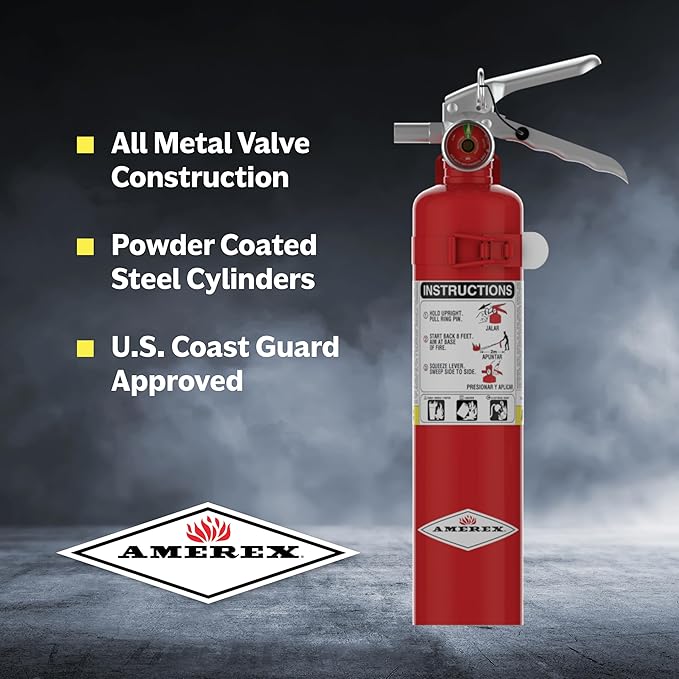
- Why it wins: Metal valve, robust marine-friendly build, ABC versatility.
- Use it: Helm, cabin, general duty anywhere aboard.
- Pros: Fast knockdown, serviceable, common parts.
- Cons: Powder residue—plan cleanup and protect electronics post-incident.
🔗 View on Amazon →
Best Compact Marine BC: Kidde Mariner 5 (5-B:C)
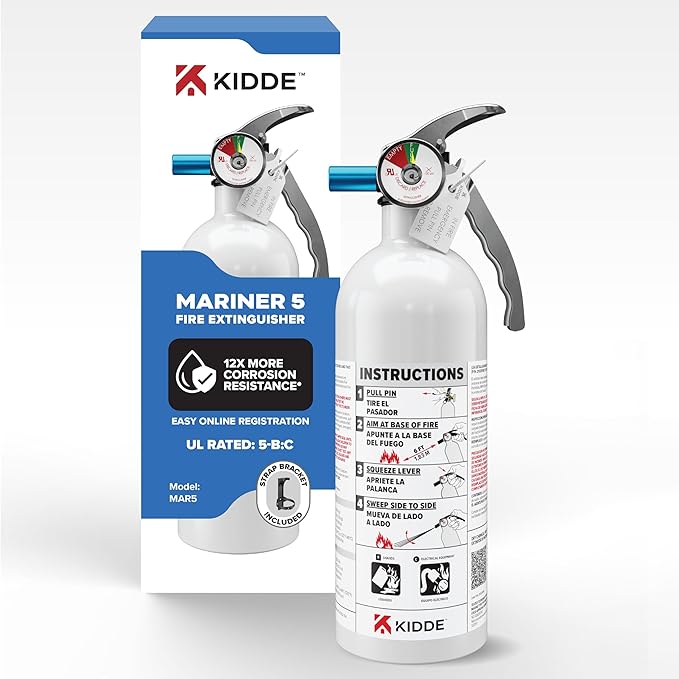
- Why it wins: USCG-recognized performance in a compact, lightweight body.
- Use it: Near engine bay, fuel lockers, cockpit.
- Pros: Focused on B/C hazards common to boats; easy to mount multiples.
- Cons: No Class A rating; still a dry chemical mess.
🔗 View on Amazon →
Best Clean-Agent (Electronics-Safe): H3R Performance MaxOut Mini Fire Extinguisher
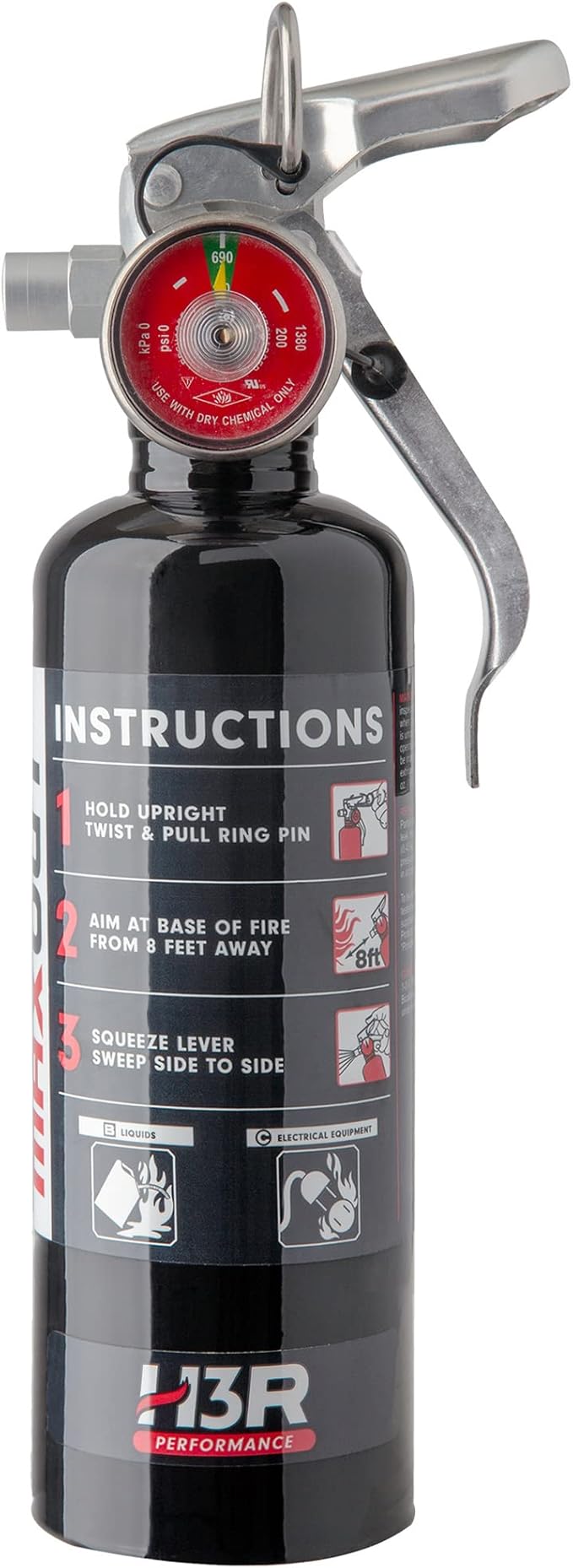
- Why it wins: Zero residue; ideal around helm electronics, nav gear, and upholstered cabins.
- Use it: Helm station, salon, staterooms.
- Pros: Saves your gear from corrosive powder; excellent on B/C fires.
- Cons: Shorter discharge time; higher cost; confirm approval markings for carriage needs.
🔗 View on Amazon →
Best Budget Marine Unit (Disposable): First Alert MARINE1 (B:C)
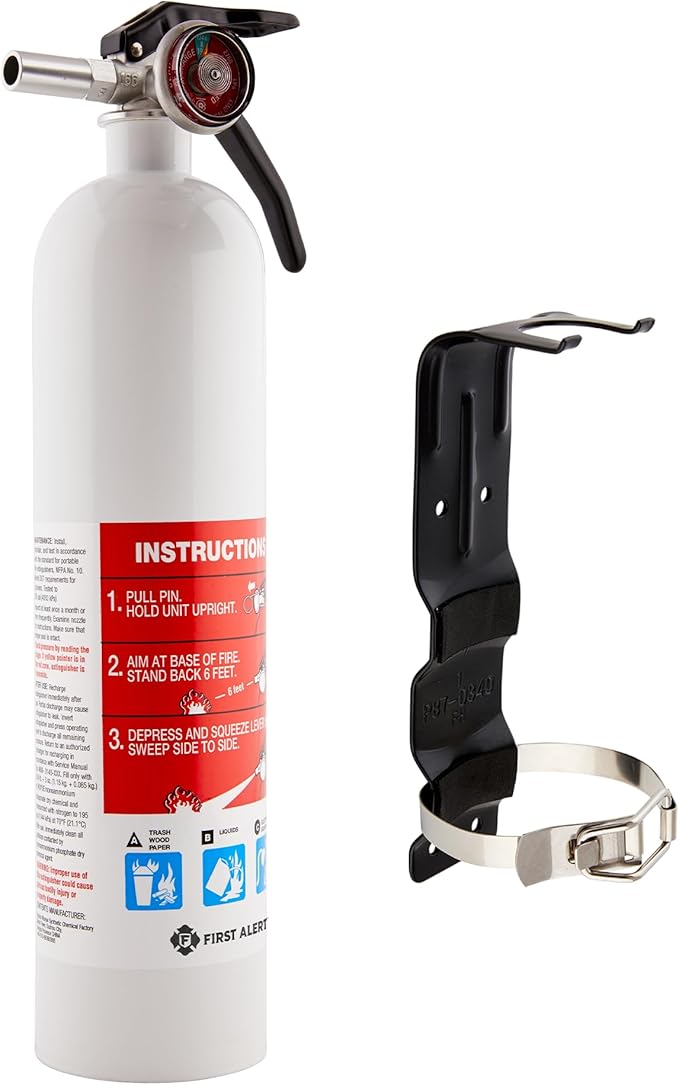
- Why it wins: Affordable, compact, USCG-approved for many small vessels.
- Use it: Small runabouts, personal watercraft (PWC), secondary positions.
- Pros: Light, simple, easy to deploy.
- Cons: Disposable; replace at end-of-life; not serviceable.
🔗 View on Amazon →
Best “No-Mess” Supplemental Tool: Fire Blanket (Marine-rated)
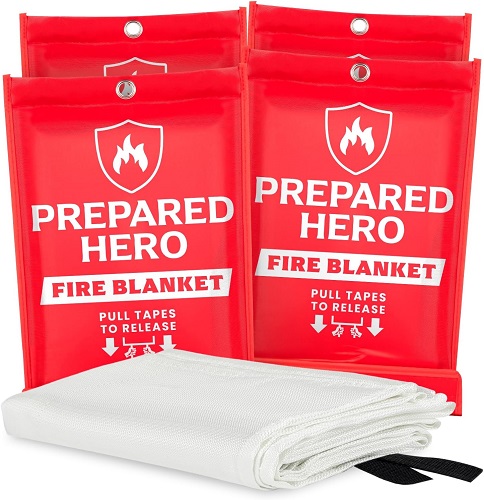
- Why it’s here: Instant smother on galley pans or small fabric fires with zero damage.
- Use it: Galley, grill, near cabin entry.
- Pros: Foolproof; no discharge training needed; safe indoors.
- Cons: Not a substitute for required extinguishers.
🔗 View on Amazon →
Advanced Option (Fixed Engine Compartment): Automatic Fire Extinguisher System

- Why consider it: NO ELECTRICITY, PRESSURE, OR WIRING REQUIRED
- Use it: Household Fire Protection for Electric Boxes, Solar Generators, Vehicles, Lithium Batteries, Ship Cabins
- Pros: Automatic detection; buy-time to broadcast Mayday and manage evacuation.
- Cons: Only a 6 year lifespan and cost.
🔗 View on Amazon →
Quick Comparison Table (What You’re Actually Choosing)
| Pick | Class | Agent | Typical Size | Refillable | Best Location |
|---|---|---|---|---|---|
| Amerex B417T | A/B/C | Dry chemical (ABC) | 2.5 lb | Yes | Helm, cabin, general |
| Kidde Mariner 5 | B/C | Dry chemical (BC) | ~2.5–3 lb | Some models | Engine/fuel areas |
| H3R Performance | B/C | Clean agent (Halotron®) | ~1.4 lb | Yes | Helm, electronics |
| First Alert MARINE1 | B/C | Dry chemical (BC) | Compact | No | Small boats, backups |
| Fire Blanket | — | — | 1–1.5 m square | Reusable (if intact) | Galley/grill |
| Fixed Clean-Agent (auto) | A/B/C | Aerosol | Sized to space | No | Electrical Components |
Always confirm model-specific approvals, ratings, and serviceability before purchase.
Placement & Mounting Plan (By Boat Type)
Rule one: If you can’t reach it in under 5 seconds with one hand, it’s in the wrong place.
Small runabout / bowrider (≤ 24’)
- 1 × BC or ABC in cockpit near the helm.
- 1 × BC near engine hatch (but don’t open on a suspected engine fire—use a fire port if equipped).
Center console
- 1 × ABC under the helm (quick-release).
- 1 × BC aft near the fuel/bilge access.
- Optional: clean-agent bottle near the electronics stack.
Cuddy cabin / walkaround
- 1 × ABC at helm.
- 1 × BC near engine/bilge.
- 1 × clean-agent in cabin.
- Fire blanket in galley (if installed).
Sailboat (auxiliary engine)
- 1 × ABC at companionway.
- 1 × BC near engine access or fire port.
- 1 × clean-agent near nav station/electronics.
Cabin cruiser / sportfisher
- 1 × ABC at helm + 1 × clean-agent at flybridge/upper helm.
- 1 × BC near each machinery space (consider fixed auto system).
- 1 × clean-agent per sleeping cabin.
- Fire blanket + small clean-agent in galley.
Mounting tips
- Use marine-rated brackets.
- Mount low and forward of likely escape routes.
- Keep clear of salt spray if possible; avoid lockers behind latches.
- Label locations on a simple safety plan card near the helm.
Maintenance & Readiness (The Boring Part That Saves Boats)
Monthly 60-second check
- Gauge in green; pull-pin sealed.
- No corrosion, dents, or clogged nozzles.
- Bracket tight; location unobstructed.
- Give it a light shake (dry chemical can cake over time).
Annual habit
- Wipe down labels; verify USCG approval still legible.
- For rechargeable units: schedule professional inspection/service per label.
- For disposables: verify manufacture date; replace at end-of-life window.
After any discharge
- Consider it out of service until recharged/replaced.
- For dry chemical incidents: wipe and vacuum electronics ASAP; corrosion can start fast.
Pro-level note: Many rechargeable units follow a 6-year maintenance and 12-year hydrostatic test rhythm. If that sounds like a lot, choose serviceable brands with local support—or disposable units you’re comfortable replacing on schedule.
How to Fight a Boat Fire (And When to Walk Away)
- Announce and prep: Alert crew, assign roles, everyone dons PFDs.
- Mayday early: State location, boat name, nature of emergency.
- Isolate fuel and power: Shut off engines and fuel; flip the battery switch if safe.
- Attack smart:
- Engine fire: Do not open the hatch. Discharge through a fire port or crack and spray low to avoid feeding oxygen.
- Electrical fire: Use BC/clean-agent while circuits are energized; de-energize ASAP.
- Galley fire: Use fire blanket or clean agent; never throw water on burning oil.
- Keep an exit: Fight from upwind, back to an escape path, one person in command.
- Know your limit: If flames grow or smoke overwhelms, abandon to PFDs/raft, stay together, and keep radioing.
Extra Gear That Complements Extinguishers
- Fire blanket (galley/grill). Instant, no-damage suppression.
- Smoke + CO detectors (marine-rated). Early warning in cabins.
- Bilge fume detector. Alerts on fuel vapor accumulation.
- Automatic engine-room system. Your best friend if fire starts where you can’t see it.
- Generic Element Fire Extinguisher Stick. 50 second discharge NO MAINTENANCE
FAQs (Quick, Clear Answers)
Q: How many extinguishers do I need?
A: It depends on boat length and configuration. Meet the USCG minimum for your vessel—and add units for engine, helm, galley, and cabin.
Q: ABC or BC for boats?
A: You need strong B/C capability for fuel/electrical. ABC adds Class A coverage for cabin materials. Many skippers carry both.
Q: Are aerosol “spray extinguishers” legal for carriage?
A: Most aerosols are not recognized as primary USCG equipment. Treat them as supplemental only, unless specifically labeled to meet recognized standards.
Q: Do extinguishers expire?
A: Disposable units have a life window; replace per label/USCG guidance. Rechargeable units need periodic service and pressure checks.
Q: Can I use water on a boat fire?
A: Never on electrical or fuel fires. Water is appropriate only for Class A combustibles when power is off and fuel is not involved.
Opinionated Shortlist (If You Want to Be Done in 60 Seconds)
- General-purpose: Amerex B417T (ABC) — tough, serviceable, trusted.
- Fuel/electrical focus: Kidde Mariner 5 (BC) — compact and compliant.
- Electronics/cabin: H3R HG100C (clean agent) — no residue, worth the price.
- Galley: Marine-rated fire blanket — fast, clean, simple.
- Engine room: Automatic clean-agent system — it fights when you can’t.
Final Thoughts
Fire at sea is unforgiving—but preparation stacks the odds in your favor. Pick USCG-approved extinguishers, place them where your hand finds them in seconds, and maintain them like they matter—because they do. Pair dry chemical stalwarts with a clean-agent bottle at the helm and a fire blanket in the galley, and you’ll have a smart, layered defense that protects people first and property second.


